Growing
Growing Basil on a Kitchen Windowsill: A Complete Beginner's Guide
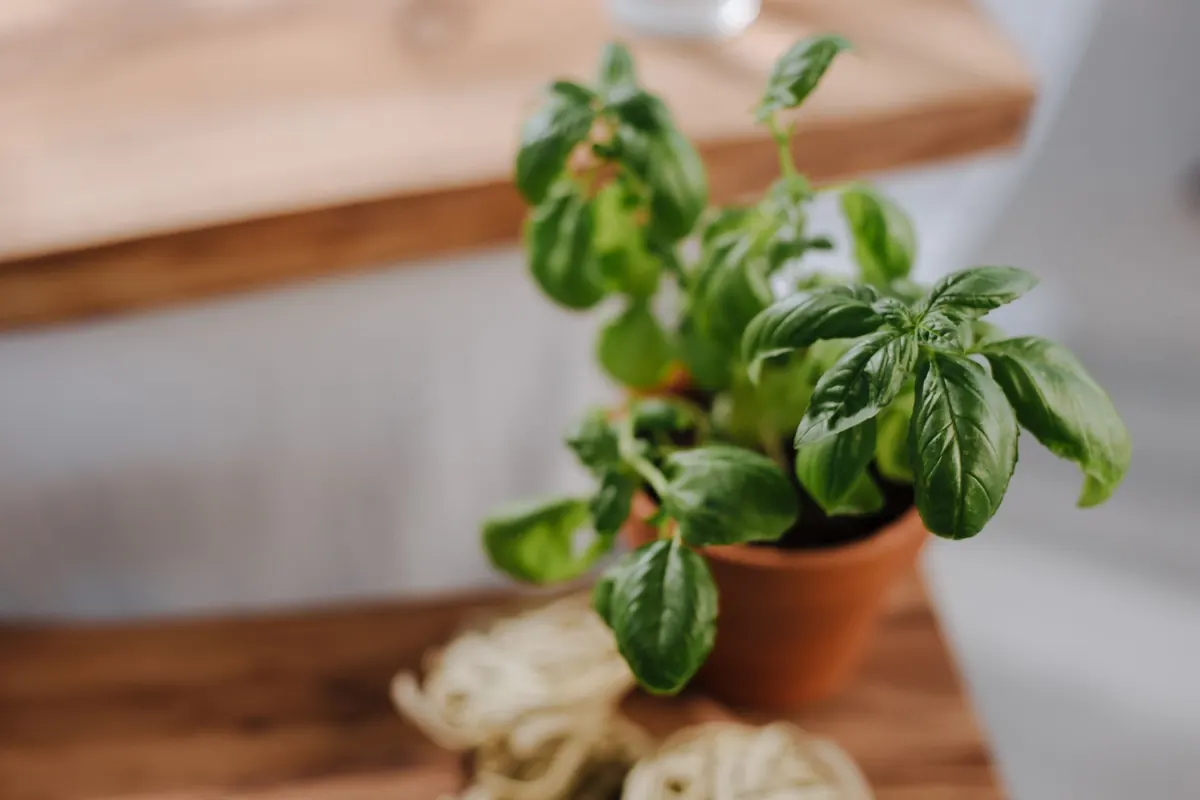
Most supermarket basil is sold to be used, not kept. You bring home a dense little forest of stems, strip it for a pasta sauce, and by the weekend the leaves have gone limp and yellow. Yet basil is one of the easiest herbs to grow indoors — it simply arrives in conditions designed for a short, fast life on a shelf.
Move it to a brighter spot, thin it out, water it properly, and that same pot can keep you in leaves for months. If you are starting from seed instead, the rewards are slower but the plants tend to be sturdier and live longer. Either route works on a kitchen windowsill, provided you get a few basics right.
Start with light, because basil is honest about it
Basil is a Mediterranean plant. It wants sun, and a lot of it. A windowsill that faces south is ideal; east or west will usually do at a push; a north-facing window rarely gives enough, and you will see the plant stretch towards the glass with pale, thin stems and small leaves.
Aim for at least six hours of decent daylight. In a British winter, that is a tall order, and even a good summer windowsill loses hours of usable light to overcast skies and net curtains. Two practical fixes:
- Move the pot as close to the glass as you can, and wash the window inside and out. Grime costs you more light than you would think.
- Add a small LED grow light on a timer for eight to twelve hours a day if the plant is sulking between October and March. A cheap desk-style clip lamp used consistently beats an expensive one used occasionally.
Turn the pot a quarter turn every few days. Basil leans hard towards the light, and a plant left alone will end up lopsided with a bare back.
Deal with the supermarket pot before you do anything else
Those pots are grown for volume, not longevity. Dozens of seedlings are crammed into a space meant for two or three, and the roots have usually been sitting in damp compost for days. Separating them feels brutal, but it works.
- Water the pot an hour beforehand so the root ball holds together.
- Tip the whole thing out onto a board and gently tease the seedlings apart with your fingers. Rinse the roots in a bowl of water if they are tightly knitted.
- Choose the strongest four or five plants and pot each into its own 9cm pot, or three into a 15cm pot, using peat-free multipurpose compost.
- Firm the compost gently, water to settle it, and keep the pots out of harsh direct sun for two or three days while they recover.
If you would rather not divide them, you can still improve matters by snipping out the weakest stems at soil level to give the rest room to breathe. It buys time, though not as much as repotting.
If you are sowing your own
Sow seed thinly on the surface of damp compost from mid-spring onwards, press it in lightly — it needs light to germinate, so do not bury it — and keep it at around 18–21°C. Seedlings appear in a week or so. Wait until they have two proper sets of leaves before potting them on. A windowsill with good light and a warm kitchen is plenty; you do not need a propagator, though one speeds things up.
Watering: less often than you think, more thoroughly
Overwatering kills more indoor basil than drought does. The compost stays soggy, roots suffocate, and the plant collapses with blackened stems — a classic sign of damping off rather than thirst.
Push a finger about 2cm into the compost. If it feels damp, wait. If it feels dry at that depth, water until a little runs out of the drainage holes, then empty the saucer. Little and often is the wrong instinct here; a proper soak every few days suits basil better than a daily splash.
Two things to watch in a kitchen. Pots sitting on a sunny sill dry out fast, so check daily in summer. Pots near a sink or kettle get splashed constantly and may need checking only twice a week. Terra cotta dries faster than plastic. All of this means you should check rather than follow a rigid schedule.
Never let the pot stand in water. Roots that sit in a puddle for a day or two will rot, and no amount of later care will bring them back.
Feed lightly, and only once the plant is growing
Fresh compost has enough nutrients for around six weeks. After that, feed with a general-purpose liquid fertiliser at half the strength suggested on the bottle, roughly every fortnight through spring and summer. Full strength tends to push soft, floppy growth with plenty of leaf and little flavour.
Stop feeding in late autumn and winter. Growth slows dramatically, the plant needs far less, and unused nutrients build up in the compost. If you are keeping basil going through the darker months, it is more about survival than production.
Pick it properly and it will keep producing
This is the part most people get wrong. Taking single leaves from the bottom of the plant, or stripping whole stems, tells the plant to stop branching. Pinching out the growing tip does the opposite.
Find a stem with a pair of leaves and a small cluster of new leaves at the top. Cut or pinch just above that pair, leaving the plant to grow two new shoots from the leaf joints. Do this regularly, starting when the plant has three or four sets of leaves, and you get a bushy plant instead of a single leggy stem.
Always leave at least two sets of leaves below the cut so the plant has something to work with. Use the trimmings in the kitchen straight away — basil loses most of its aroma within a day of picking.
Flowers are the end of good leaf production. Once a plant sets flower buds, leaf growth slows, the flavour turns harsher, and the plant puts its energy into seed. Pinch out buds as soon as you see them, unless you are deliberately saving seed at the end of the season.
Common problems, quickly solved
- Yellow lower leaves: usually overwatering or a pot that is too crowded. Check the compost before assuming the plant needs feeding.
- Long, weak stems with wide gaps between leaves: not enough light. Move closer to the glass or add a lamp.
- Drooping despite damp compost: root damage from sitting in water. Stop watering, move the pot somewhere airy, and let it dry out.
- Tiny flies around the compost: fungus gnats, encouraged by constantly wet soil. Let the top layer dry between waterings and water from below where you can.
- Pale, mottled leaves in midsummer: scorching through glass. Move back from the pane slightly or shade with a sheet of paper during the hottest hours.
Keeping it going through winter and beyond
Come autumn, growth slows and the plant is unlikely to flourish without help. Take cuttings in late summer rather than fighting to keep an old plant going: snip a healthy stem just below a leaf joint, strip the lower leaves, stand it in a glass of water on a bright sill and pot it up once roots appear in a couple of weeks. Fresh young plants cope with winter far better than tired ones.
Realistically, most indoor basil lasts a season. That is normal, not failure. Sow another batch in spring, keep the pot close to the light, water only when the compost asks for it, and pinch the tips often. A kitchen windowsill will happily supply more basil than most households can eat.
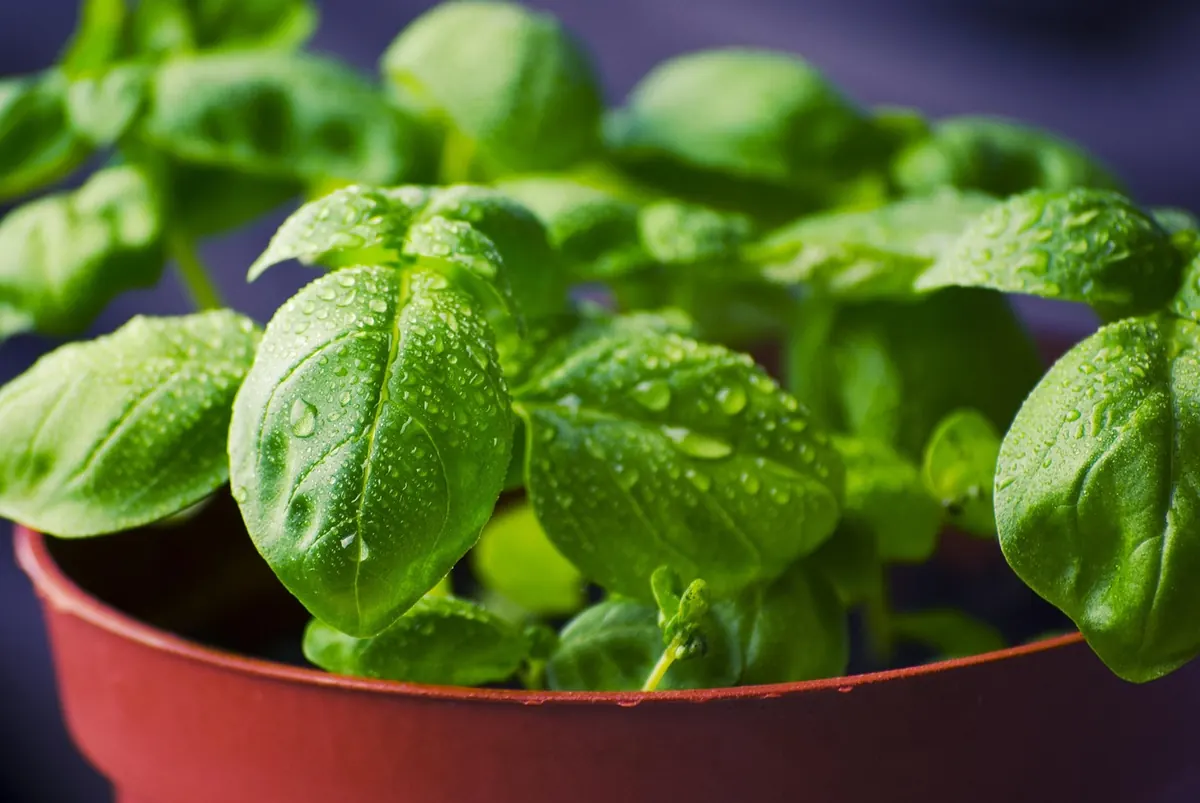
Photo: tookapic / Pixabay