Planters
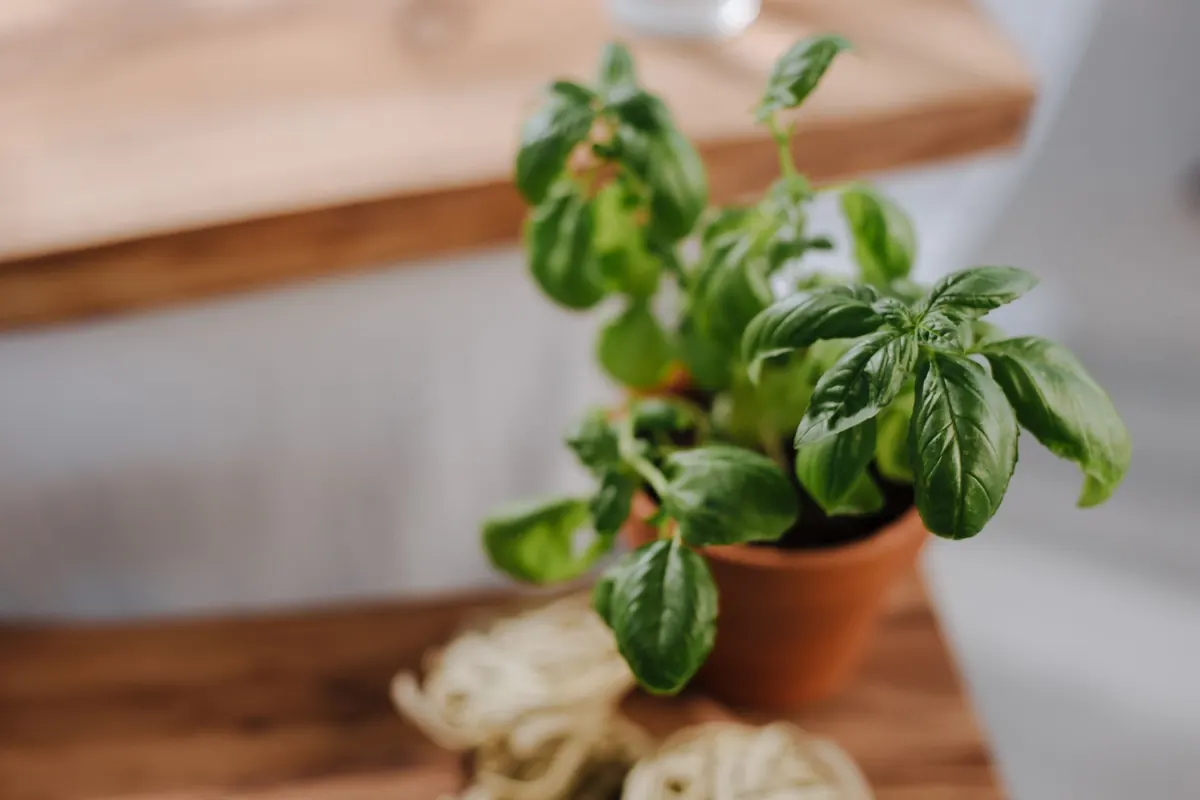
Choosing the Best Pot for Basil: Size, Drainage and Material Compared
Basil grows quickly, drinks hard and sulks the moment its roots sit in cold, soggy compost. So the pot you choose is not just a decorating decision. A container that suits a slow-growing succulent will quietly ruin a basil plant within a fortnight: too shallow and the roots run out of room, too watertight and they rot, too small and you will be watering twice a day by mid-July. The good news is that basil's requirements are simple, and once you know what it wants from a container you can choose between terracotta, plastic and fabric with confidence.
Start with size: how much room does one plant need?
Basil has a fibrous, wide-spreading root system rather than a long taproot, and most of its feeding roots sit in the top 15 cm or so of compost. That does not mean it will thank you for a shallow pan. Depth gives you two things: a moisture reserve that stops the compost swinging between bone dry and soaking, and enough weight to keep a top-heavy plant upright.
As a working rule, give a single plant a pot at least 15 cm across and 15 cm deep, and treat 20 cm as the comfortable minimum. A 20–25 cm pot holding four to five litres of compost will grow a far better plant than a cramped 10 cm pot on the windowsill. For three plants, use a 30–35 cm pot or a trough at least 20 cm deep. Bush types such as 'Spicy Globe' cope with slightly less room; large-leaved sweet basil and purple varieties appreciate more.
The classic mistake is leaving a supermarket pot of basil as it is. Those plants are grown several to a clump in barely any compost, with roots already circling.
Drainage: the one thing you cannot compromise on
Basil likes moisture but hates a waterlogged root zone. Constant wetness starves the roots of oxygen, encourages root rot and fungus gnats, and produces the yellowing lower leaves and blackened stems that signal a plant in trouble.
So: at least one drainage hole, ideally three or more, and a saucer you actually empty. A layer of gravel or crocks in the base does not improve drainage — it can raise the level at which water sits in the compost. Put a shard or a small square of mesh over the hole to stop compost washing out, and leave it at that.
- Holes: check them before planting, and drill or widen them if the pot has only a decorative dimple.
- Compost: peat-free multipurpose mix with a handful of perlite or horticultural grit per pot — roughly a quarter of the volume as drainage material.
- Watering: water until it runs out of the bottom, then stop. Empty the saucer after twenty minutes.
- Airflow: pot feet or three small stones under the base stop the pot sitting in a puddle on a saucer or paving slab.
- Warning signs: sour-smelling compost, green algae on the surface or tiny flies around the rim mean the roots are staying too wet.
Terracotta: breathable, forgiving, thirsty
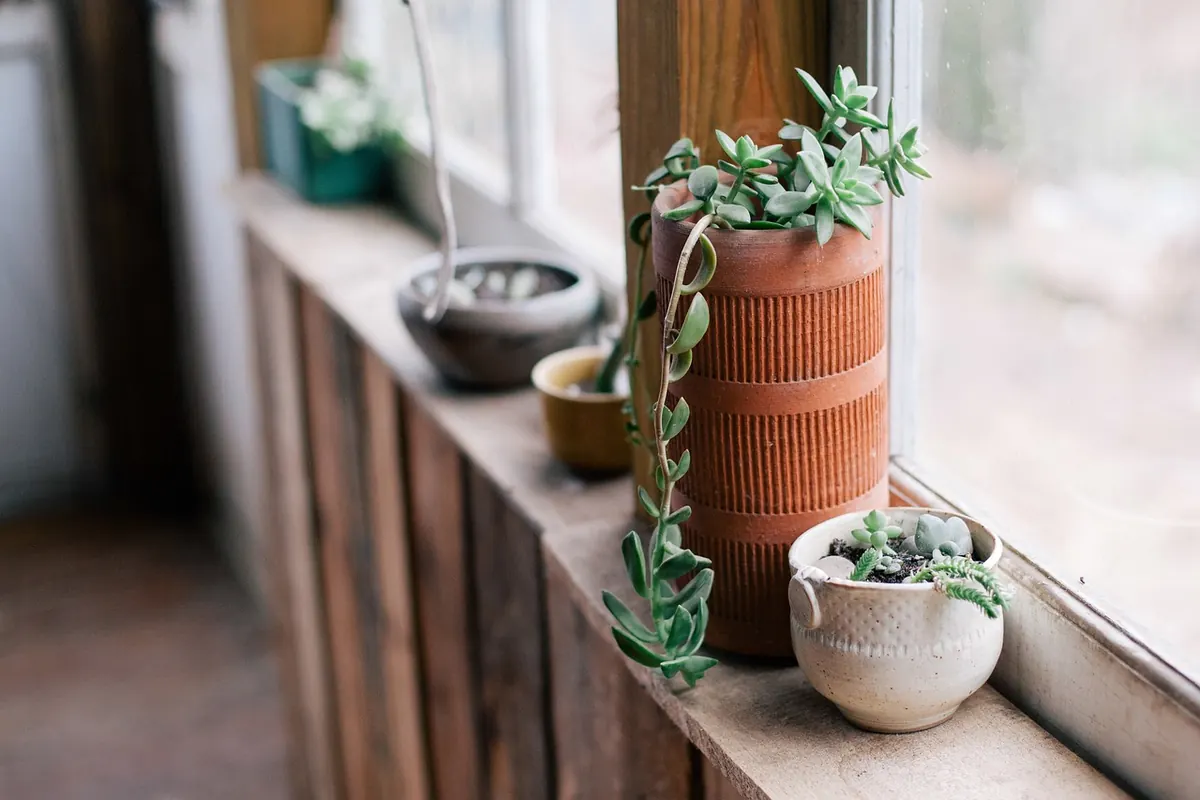
Unglazed terracotta is porous, so water evaporates through the walls as well as the surface. That makes it the most forgiving choice if your instinct is to water generously — it is genuinely difficult to drown basil in terracotta. It is also heavy, which keeps tall plants upright on a windy balcony, and it looks good doing it.
The trade-off is speed. A terracotta pot in full sun may need watering daily, sometimes twice, and the evaporation keeps the root zone a degree or two cooler, which slows growth in a chilly British spring. Expect a white bloom of dried salts on the rim over a season; scrub it off with a brush. Unglazed pots can crack in a hard frost, so empty and store them dry over winter. Glazed ceramic looks similar but behaves much more like plastic.
Plastic: cheap, light and slow to dry out
Plastic holds moisture far longer than terracotta, so it suits anyone who forgets to water, and it is the sensible choice on a hot, exposed patio where terracotta would be dry by lunchtime. It is inexpensive, easy to drill extra holes in, and available in every size.
The drawbacks are practical rather than fatal. Light pots tip over, so weight the base with a few stones or choose a wider, lower shape. Dark colours absorb heat — useful in a cool greenhouse, less so in a sun-baked corner where the roots can cook. Pale colours stay cooler. Because plastic does not breathe, everything depends on the compost and the drainage holes doing the work, so a good open mix is not optional here. Self-watering pots with a reservoir below the compost work well once the wicking is right, but they are easy to leave permanently saturated; let the reservoir run dry for a day before refilling.
Fabric pots: superb roots, constant watering
Fabric grow bags let air reach the sides of the root ball. When a root tip meets air it stops and branches instead of circling, which produces a dense root system and stronger top growth. Drainage is excellent, so overwatering is almost impossible.
The price is water. Fabric dries from every surface, and a 10-litre pot in a sunny spot may need watering every morning in summer. Fabric suits greenhouse growing, big plants you intend to harvest heavily, and anyone who tends to underwater. On a windowsill it looks scruffy and sheds water onto the sill, so stand it in a deep tray and check the surface daily.
Matching the material to your habits
- You water too often: unglazed terracotta, or a fabric pot.
- You forget for days: plastic, ideally pale, or a self-watering pot.
- Cool climate or north-facing sill: plastic or glazed ceramic, which warm up faster in spring.
- Hot, sunny patio: fabric for root health if you can water daily, terracotta if you cannot.
- Small kitchen windowsill: one plant in a 15–20 cm glazed or plastic pot with a saucer.
A quick pot-up plan that works
- Take the crowded supermarket clump, tease the roots apart under a running tap and separate the stems.
- Fill 15–20 cm pots with peat-free multipurpose compost mixed with a quarter perlite or grit.
- Plant one stem per pot, firm the compost gently and water until it drains.
- Keep at around 18–21°C in good light, out of cold draughts, and pinch out the growing tips once plants have three or four pairs of leaves.
- Move up one pot size when roots appear through the drainage holes — never straight into a much larger pot, where unused compost stays wet.
Get the size and drainage right and the material becomes a matter of matching the pot to your watering habits. A basil plant in a well-drained 20 cm pot, watered properly and pinched regularly, will keep you
Photo: Ron Lach / Pexels