Varieties
8 Basil Varieties Worth Growing in the British Climate
Basil has a reputation as a herb that needs a Mediterranean heatwave, which is why so many British gardeners end up with a windowsill of pale, leggy seedlings by July. The genus is wider than the supermarket pot suggests, though, and several varieties cope with grey skies and cool nights far better than the standard Genovese everyone starts with. Choose carefully, sow in succession, and you can be cutting leaves from June until the first frosts. These eight earn their place.
What actually decides success here
Two things matter more than anything else: warmth and light. Basil stops growing below roughly 10°C, and a plant set out in late May during a cold snap will sulk for weeks and never quite catch up. Wait until nights are reliably mild, usually early June in most of the country, and keep a fleece handy for the first fortnight.
Humidity is the other factor. Crowded, airless plants in a damp summer are prone to downy mildew, which shows as yellowing between the veins and a greyish flush underneath the leaf. Space plants properly, water at the base in the morning rather than over the foliage, and pick leaves regularly to keep air moving through the plant.
The dependable green varieties
Genovese
The benchmark for good reason. Large, soft, slightly cupped leaves with a sweet, peppery flavour that holds up in pesto. Vigorous in a greenhouse or polytunnel, more modest outdoors, where it can reach 40–50cm in a decent summer. Pinch out the growing tip when the plant is around 15cm tall to force it to branch; a single-stemmed plant gives you very little to harvest.
Napoletano
Also sold as lettuce-leaf basil, and the name tells you what you need to know. The leaves are enormous, crinkled and mild, ideal for wrapping, layering in sandwiches or tearing over a tray of tomatoes. It produces fewer leaves than Genovese but each one is worth several, and it stands up to cooler spells better than most. A good choice for an open bed in a less-than-perfect spot.
Greek bush basil
A compact, tightly mounded plant, rarely more than 20–25cm, with small, intensely aromatic leaves. It is not the most productive by weight, but it is neat enough for a windowsill or a low pot by the door, and it handles wind better than the big-leaved types. Snip whole sprigs rather than individual leaves and use them whole — chopping such small leaves only bruises them.
Purple and dark-leaved types
Red Rubin
Deep purple leaves with a flavour close to Genovese, plus a faint clove note that works well with garlic and vinegar. The colour is strongest in full sun; plants in shade tend towards bronze and green. It is slower to bolt than many purple varieties, which makes it the practical choice if you want colour without sacrificing yield. Steep the leaves in white wine vinegar for a startling pink dressing.
Purple Ruffles is the prettier cousin, with fringed, fennel-like leaves. Worth a pot for looks and for garnishing, but treat it as decoration first and a crop second — it gives noticeably less leaf than Red Rubin.
Lemon and lime basils
Mrs Burns' Lemon
Narrow, pale green leaves and a clean, sherbet lemon scent. This is the one to use with fish, new potatoes, cucumber salads and cold drinks, and it is noticeably more tolerant of dry compost than the broad-leaved types. It grows tall and slightly floppy, so stake it or pinch it early to keep it bushy.
Lime basil
Small leaves with a bright, almost lime-skin tang and a slight hint of mint. Excellent with Thai and Mexican cooking, and one of the best varieties for a kitchen windowsill because it stays compact and tolerates the lower light levels indoors reasonably well. Turn the pot regularly so it does not lean permanently towards the glass.
Aromatic Asian basils
Siam Queen
A Thai basil with purple stems, purple flowers and a strong aniseed flavour that survives cooking, which is more than can be said for sweet basil stirred into a hot curry. It handles heat and humidity better than the Italian types and will keep producing if you remove the flower spikes promptly. Use it in stir-fries, curries and noodle dishes.
Holy basil
Peppery, clove-scented and the most demanding of the eight. It needs the warmest spot you have: a greenhouse, a polytunnel or a south-facing wall with shelter. Growth is slower and shrubby rather than lush. Kept indoors above about 15°C over winter on a bright sill, it will often survive to produce another season, which the tender annuals will not.
Growing notes that apply to all of them
- Sow little and often. A pinch of seed every three to four weeks from late February to July gives you a steady supply rather than one glut followed by nothing.
- Germinate warm. Around 18–21°C suits basil. Press seed into the surface of damp compost and leave it uncovered, as light helps germination.
- Harden off properly. A week of short spells outdoors before planting out prevents most of the check that sets young plants back.
- Grow in pots if in doubt. A 20cm pot of multipurpose compost with a handful of grit suits most varieties, and pots can be moved under cover when the weather turns.
- Pinch, pinch, pinch. Remove flower buds as soon as they appear; once a plant sets seed, leaf production drops sharply.
- Feed lightly. A weak liquid feed every fortnight is plenty. Rich feeding gives soft growth that mildews easily.
- Watch young plants. Slugs and snails will strip seedlings overnight; a copper ring or a night-time check is worth the effort.
Choosing for the space you have
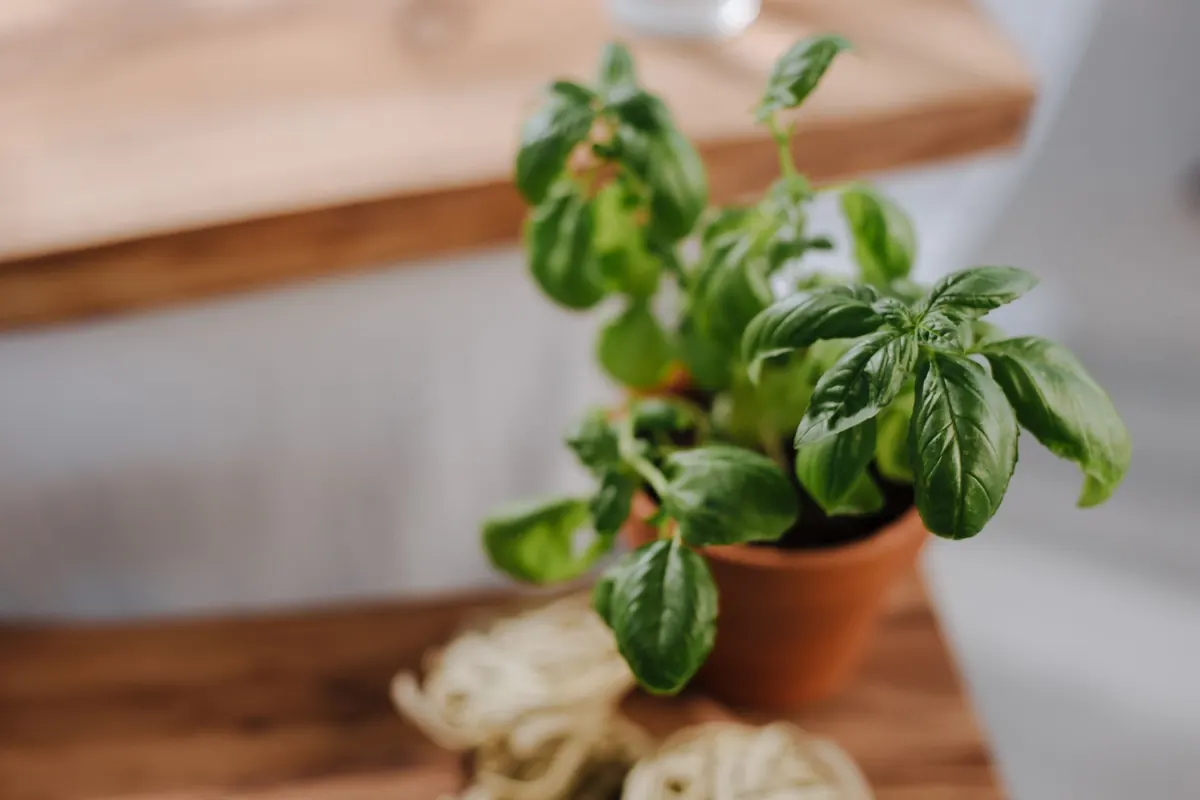
If you have one sunny windowsill, take Greek bush or lime basil — both stay manageable in a small pot. A greenhouse or polytunnel opens up the full list, including holy basil, and will give you Genovese big enough for a proper batch of pesto. For an open bed in a warm, sheltered garden, Napoletano and Red Rubin are the safest bets.
Whichever you pick, sow more than you think you need. A single plant yields a modest handful of leaves at a time, and the difference between a good summer of basil and a disappointing one is usually nothing more than having a second or third pot coming along behind the first.
Photo: Couleur / Pixabay