Varieties
Sweet Basil vs Thai Basil: Which Variety Suits Your Kitchen?
Two basil plants can sit side by side on the same windowsill and taste like they come from different planets. Sweet basil is soft, broad-leaved and sweetly clove-scented; Thai basil is narrow-leaved, purple-stemmed and smells sharply of aniseed. Both are easy to grow in a British summer, both cost roughly the same in seed, and both will out-perform anything you bring home from the supermarket. The question is which one earns its space in your kitchen — or whether you should simply grow both.
The short answer
If most of your cooking is Mediterranean — tomatoes, pasta, pizza, olive oil — grow sweet basil. If you reach for fish sauce, chillies, coconut milk, limes and noodles, grow Thai basil. If you do a bit of everything, grow one pot of each: they need the same compost, the same watering and the same sunny spot, so there is no extra work in it.
One thing worth knowing before you buy seed: Thai basil is not holy basil. Holy basil, the one used in Thai stir-fries, is a related but different plant with a peppery, clove-like bite. Thai basil is the aniseed one you get alongside a bowl of pho or stirred into a green curry.
Flavour: clove and pepper versus aniseed
Sweet basil tastes sweet and rounded, with clove and anise notes and a faint peppery finish. Its oils are volatile, which is why it works best raw or added in the last minute of cooking. Heat it for too long and the perfume goes, leaving a slightly bitter, cooked-green flavour. Varieties sold as Genovese are the ones to look for if pesto is the plan.
Thai basil is bolder and more savoury. The dominant note is aniseed or liquorice, with a background warmth that some people call minty and others call slightly camphor-like. Crucially, it holds that flavour in heat. Leaves stirred into a curry in the final minute keep their scent and their shape far better than sweet basil would.
Identifying them at a glance
Seed packets get mixed up, and garden centres sometimes label Thai basil simply as “basil”. A quick look at the plant will tell you which is which:
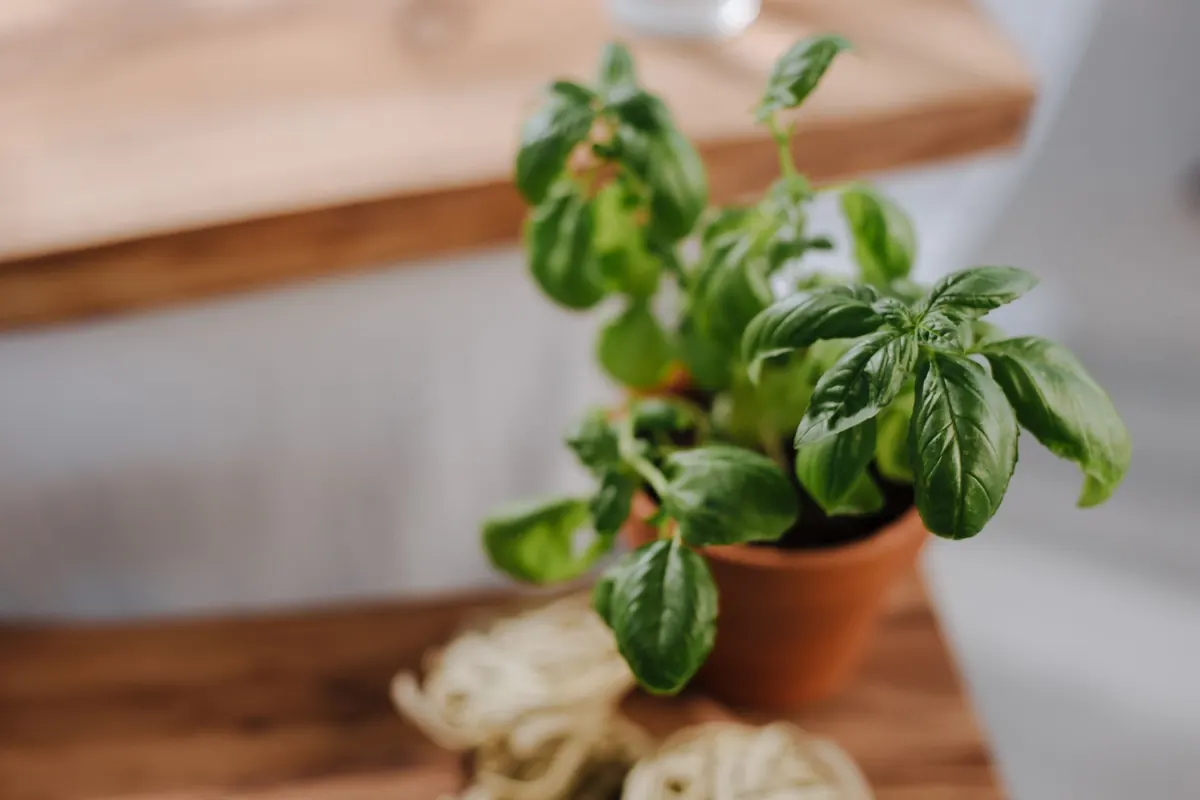
- Leaf shape: sweet basil has broad, oval, slightly cupped leaves up to about 7cm long, usually glossy with smooth edges. Thai basil leaves are narrower and more lance-shaped, often half the width, with a rougher texture and fine serrations.
- Stems: sweet basil stems are green. Thai basil stems are usually purple or purple-flushed, and the colour runs into the leaf veins.
- Flowers: sweet basil sends up a spike of small white flowers. Thai basil produces purple-pink flowers with purple bracts that are decorative enough to leave on the plant for a while.
- Scent: rub a leaf. Clove and sweetness means sweet basil; a sharp hit of aniseed means Thai.
Growing habits: how they behave in a pot
Both are tender annuals and both want the same basics: a warm start indoors in late March or April, a sunny sheltered spot after the last frost, free-draining compost and regular water at the base rather than over the leaves. Both germinate best at around 20–25°C and take roughly a week to appear. Sow thinly, barely cover the seed, and keep the compost damp.
Sweet basil
Fast, upright and generous, sweet basil can reach 45–60cm in a good season and gives you plenty of large leaves for the six weeks or so before it decides to flower. The catch is bolting: a hot, dry spell and it shoots up a flower spike, after which leaf production slows and the leaves turn bitter. Pinch out the growing tips every week or two, water consistently, and pick from the top of the plant to keep it bushy.
Thai basil
Thai basil tends to be slower to bolt and a little more forgiving of the muggy, changeable weeks a British summer often delivers. It grows into a bushier plant with smaller leaves, so you harvest more sprigs rather than fewer large leaves. Many growers find it keeps going well into September, particularly if they keep the flower spikes pinched out — though leaving a few open is no bad thing, since the flowers are edible and the bees like them.
Best uses in the kitchen
Treat them as two different ingredients rather than two versions of the same one:
- Sweet basil: pesto; tomato and mozzarella salads; bruschetta; torn over a Margherita once it comes out of the oven; stirred into a tomato sauce off the heat; layered into a roasted pepper or aubergine dish.
- Thai basil: green and red curries, added in the last minute; chilli-and-garlic stir-fries; noodle soups such as pho, where whole sprigs go in at the table; Vietnamese-style salads and summer rolls; scattered over grilled chicken or fish with lime.
Two practical notes. Sweet basil bruises and blackens quickly, so tear rather than chop it, and use a sharp knife if you must cut it. Thai basil is tougher and stands up to being shredded and stirred through hot food.
Can you swap one for the other?
In an emergency, yes — but the dish will taste different, not just less good. Sweet basil in a Thai curry sweetens the sauce and its perfume fades fast, so the result is pleasant but muddier. Thai basil in a tomato salad or a pesto brings an aniseed edge that dominates everything else, and the colour is duller. If you are substituting one for the other, use less than the recipe asks for and add it at the last possible moment.
Plant both within arm’s reach of the kitchen door. Basil is one of the few herbs you will pick more often the closer it grows — and the more you pick, the bushier it becomes.
Choosing for your kitchen
Run through the last week of meals you actually cooked. If the answer is pasta, pizza and salads, grow sweet basil — two plants, sown in April and again in June so you have a fresh flush when the first plants begin to tire. If it is curries, stir-fries and noodles, grow Thai basil, and look for a named variety such as ‘Siam Queen’ rather than a packet labelled simply “basil”.
If it is a mix of both, do the obvious thing: one pot of each. They will share a sunny windowsill happily, and between them they cover most of what a home kitchen asks of basil. Start from seed where you can. A supermarket basil is usually dozens of seedlings crammed into one pot, which is why it collapses after a fortnight. If you do buy one, split it into three or four clumps and pot each one on into its own pot with fresh compost; you will get far more leaf out of it that way.
Finally, keep picking. Both basils reward regular harvesting with more growth, and a plant you brush past on the way to the kettle is a plant you will actually use. That, more than any comparison of flavour notes, is what decides which variety suits your kitchen.
Photo: Manit Seekhao / Pexels