Growing
9 Basil Growing Mistakes UK Gardeners Keep Making
Basil isn't difficult to grow in Britain. It just expects different things from you than most of our other herbs do. Rosemary, thyme and sage will shrug off a wet, cool summer; basil will sulk, yellow and quietly die. Give it heat, sun, sharp drainage and moving air, though, and it is genuinely generous — a handful of plants can keep a kitchen in leaves from June to September.
Most failures come down to a few repeated mistakes. Here are the nine that turn up again and again, and what to do instead.
Sowing too early
Basil seed needs warmth to germinate — roughly 20–25°C — and seedlings need strong light from the day they appear. A February windowsill in a British house offers neither. Sow that early and you get patchy germination, pale stretched seedlings and a grim fortnight of damping off before spring has properly started.
The fix: hold off. Mid-April to early May indoors is early enough for a June crop, and you can sow outdoors from late May in most areas, early June further north. If you're impatient, germinate seed in a warm propagator or on top of a boiler cupboard, then move seedlings to the brightest sill you have the moment they break the surface. Small batches every three to four weeks from April to July give you a steady supply rather than one glut followed by nothing.
Planting out before the nights are warm
Basil is damaged by temperatures around 10°C and below. A cold night doesn't just slow a plant down; it can blacken the leaves and leave it sitting there for a fortnight. Last-frost dates run from late May in the south to early June in the north, and soil stays cold long after the air warms, so the calendar is a poor guide.
The fix: go by a thermometer, not a date. Wait until night temperatures are reliably above 10–12°C. Harden plants off over seven to ten days, bringing them in at night to begin with and leaving them out for longer stretches. A south-facing wall or a sheltered patio corner will do more for basil than any feed.
Overwatering
More basil dies from kindness than neglect. Wet, airless compost rots the roots, and the plant wilts as though it's dry — which is why overwatered basil usually gets watered again, making everything worse. Watch for these signs:
- lower leaves turning yellow and dropping
- a plant that droops even though the compost is damp
- a blackened, soft stem base
- fungus gnats drifting around the pot
- grey mould or a sour smell coming off the compost
The fix: water only when the top two or three centimetres of compost are dry. Water the compost rather than the leaves, in the morning, so foliage dries before evening. Every pot needs drainage holes, and anything standing in a saucer should be emptied rather than left to soak. Terracotta dries out faster than plastic, which helps.
Cramming too many plants into one pot
Sowing thickly and never thinning is the single most common reason home-grown basil ends up small, weak and mildewed. Packed plants compete for light and water, and the still, humid air between them is exactly what damping off and mildew enjoy.
The fix: as soon as seedlings have their first true leaves, thin to one per cell, or roughly one plant every 5cm in a tray. In a 15cm pot, three or four plants is the maximum — resist the urge to fill every gap.
Rescuing a supermarket pot
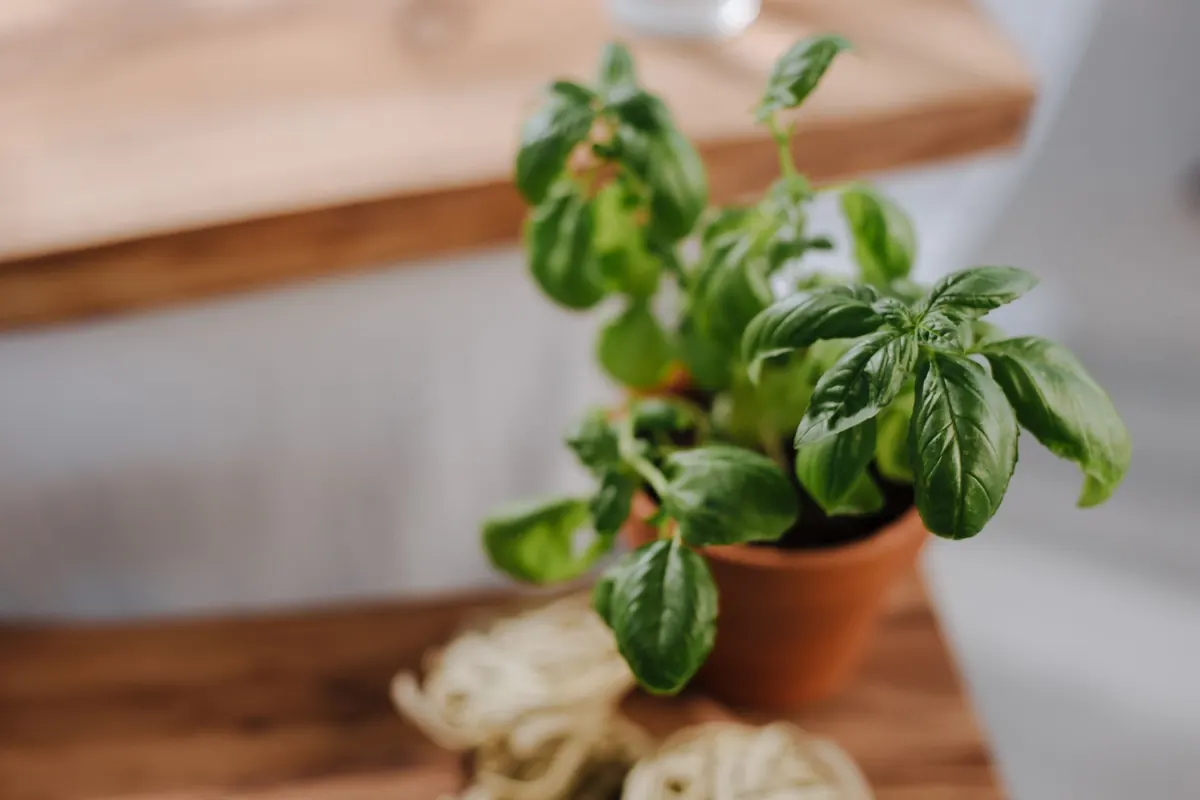
Those pots are usually dozens of seedlings crammed into a root-bound clump, grown fast and shipped cold. Don't leave them as they are. Tip the whole thing out, tease the roots apart and pot the clumps — three or four plants each — into fresh compost. Water them in, keep them warm and bright, and don't harvest for a week while they settle. You'll get far more leaf than if you'd left the clump intact.
Letting it flower
A basil plant that flowers has effectively finished. Leaf production slows, the leaves turn tougher and more peppery, and the plant puts its energy into seed. The flowers are edible and bees adore them, so it's not a disaster — but if you want leaves, pinch.
The fix: pinch the growing tip out just above a pair of leaves whenever you see buds forming. Harvest from the top down rather than stripping the lowest leaves, and never take more than a third of the plant at once. Two plants cropped properly will out-perform six left to their own devices.
Not enough light, or too much draught
Basil wants six hours or more of direct sun. A north-facing sill, or one shaded by a hedge or fence, gives you thin, pale, leggy plants that never fill out. Equally, a windowsill above a radiator or beside a door that's forever open keeps a plant under low-level stress it can't recover from.
The fix: a sunny south-facing windowsill is the easiest indoor spot. Turn pots every few days so plants grow straight rather than leaning. Outside in summer, give basil the sunniest, most sheltered position you have. If your only sill faces the wrong way, a simple LED grow light used for a few hours a day makes a visible difference to leaf size and colour.
Poor compost and overfeeding
Basil in tired, spent compost in a cramped pot will run out of nutrients and stall, however much you water it. Overfeed it, though, and you get soft, sappy growth that's more prone to disease and tastes weaker.
The fix: fresh peat-free multipurpose compost with a handful of perlite or grit mixed through for drainage. Don't feed a newly potted plant for the first few weeks — the compost is already charged. After that, half-strength balanced liquid feed every fortnight is plenty. Push it harder and you'll grow bigger leaves with less flavour.
A simple routine that keeps basil cropping
None of this is complicated once you know what you're aiming at. Five habits cover almost everything:
- Sow small batches from April to July, indoors, somewhere warm and bright.
- Pot on before roots circle the pot, three or four plants to a 15cm container.
- Water only when the surface is dry, in the morning, and never leave pots standing in water.
- Pinch out flower buds the day you spot them, and harvest from the top down.
- Move pots outside once nights stay above 12°C, and bring them in again before the first cold nights in September.
If a plant does collapse, don't nurse it for weeks. Take a few cuttings from anything healthy, or simply sow again — basil grows fast enough that starting over is usually quicker than rescuing. Get the basics right and it stops being a pot you buy every fortnight and becomes one you simply grow.
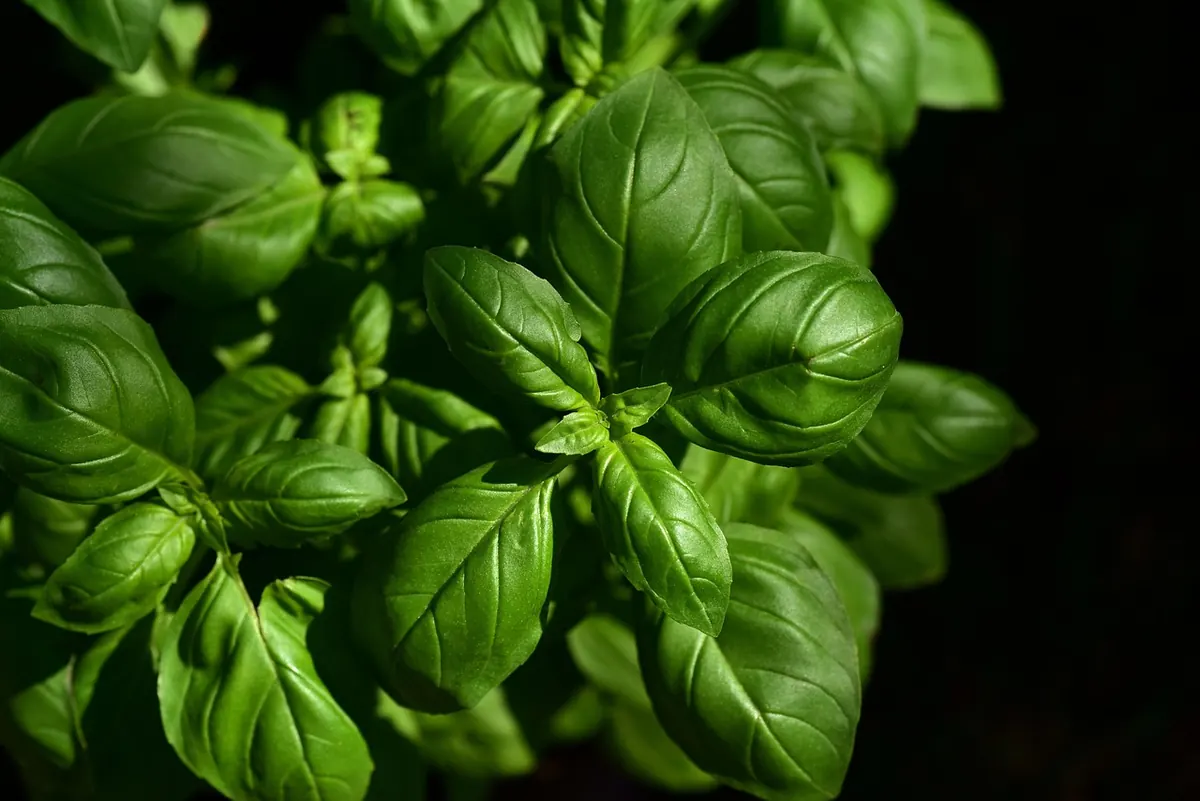
Photo: ulleo / Pixabay